
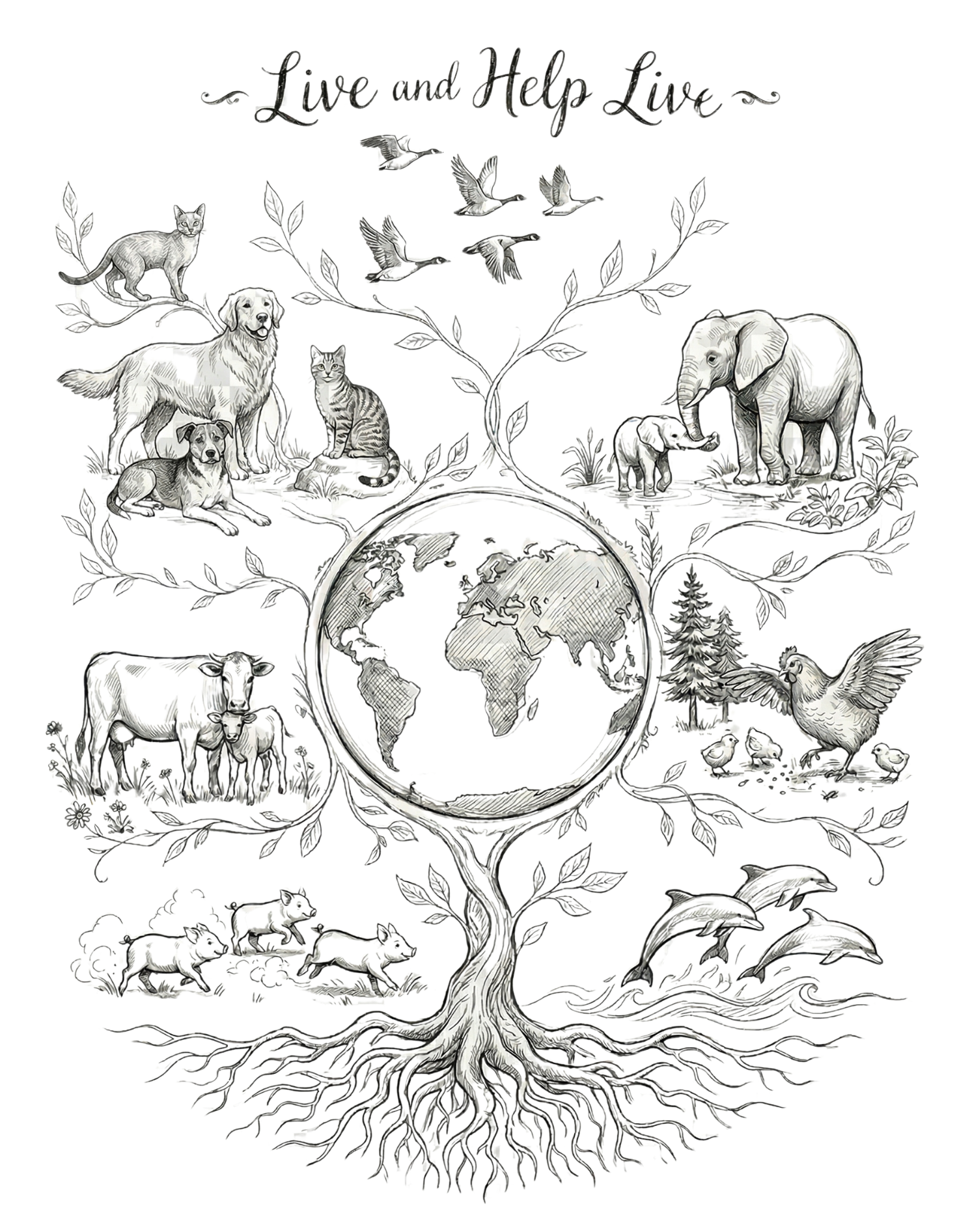
Ahimsa for Our Time
For centuries, Jains have practiced non-violence as a way of life. But the ways we cause harm — and the ways we can choose not to — have expanded far beyond what our ancestors could have imagined.
What hasn't changed is the principle. Jain ethics has always recognised that harm doesn't require your own hands. Karyu, Karavyu, Karta Anumodiyu — whether we act directly, cause someone else to act on our behalf, or simply endorse the actions of others — the suffering caused is the same.
Today, this ancient insight is more relevant than ever. Our modern economy is built on vast, invisible supply chains where harm is done on our behalf every day — often without our awareness. But once we see it, the principle is clear: if our choices sustain the harm, we share in it.
So where does this leave us? All living beings experience joy and pain, from the smallest creatures to the largest. And our everyday choices — what we eat, how we live, where our money goes — shape whether those lives experience peace or suffering.
Through what we consume: Switching to plant-based milk means fewer mother cows separated from their calves. Choosing plant-based foods reduces the suffering of billions of animals raised in factory farms. We may never see these animals, but they suffer at our request — Karavyu.
Through how we live: Walking, biking, or simply consuming less lightens our footprint on the earth and the countless beings who depend on it. Small shifts in how we move through the world ripple outward.
Through where our money goes: The bank you choose, the companies you invest in — these decisions determine whether your money funds factory farming, fossil fuel disinformation, or something better. Every investment is an endorsement.
Ahimsa has always asked us to consider the full impact of our actions on all life. Today, that consideration extends to our plates, our purchases, and our portfolios.
We don't have to provide every being with joy. But peace is their right.
Let's choose ahimsa — for all.